




































Choosing the Right Multi-Framework Compliance Platform
As your compliance programme evolves, choosing the right platform becomes about more than achieving your next certification. From managing overlapping requirements to maintaining audit readiness and accessing the right expertise, here's what to consider when evaluating a platform that can support your longer-term ambitions.
One of the most common challenges we see when supporting businesses with their compliance programmes is managing the transition from one framework to several.
A business might initially come to us looking to achieve ISO 27001 certification. Further down the line, they're looking towards SOC 2 to support international growth, ISO 42001 to strengthen their approach to AI governance, or additional ISO standards to meet wider business objectives.
It's a natural progression. But without the right foundations in place, each additional framework can introduce another layer of complexity, more administrative work and greater demands on the people responsible for compliance.
That's why I'd always encourage businesses evaluating compliance software to think beyond their immediate certification requirements.
There are several established platforms on the market, each with different strengths. Understanding how these align with your business, your internal resources and your longer-term ambitions is key to making the right decision.
Not all compliance platforms are built for the same purpose
Whilst many platforms sit under the governance, risk and compliance (GRC) umbrella, their areas of focus can differ considerably.
Broadly speaking, there are three approaches worth understanding:
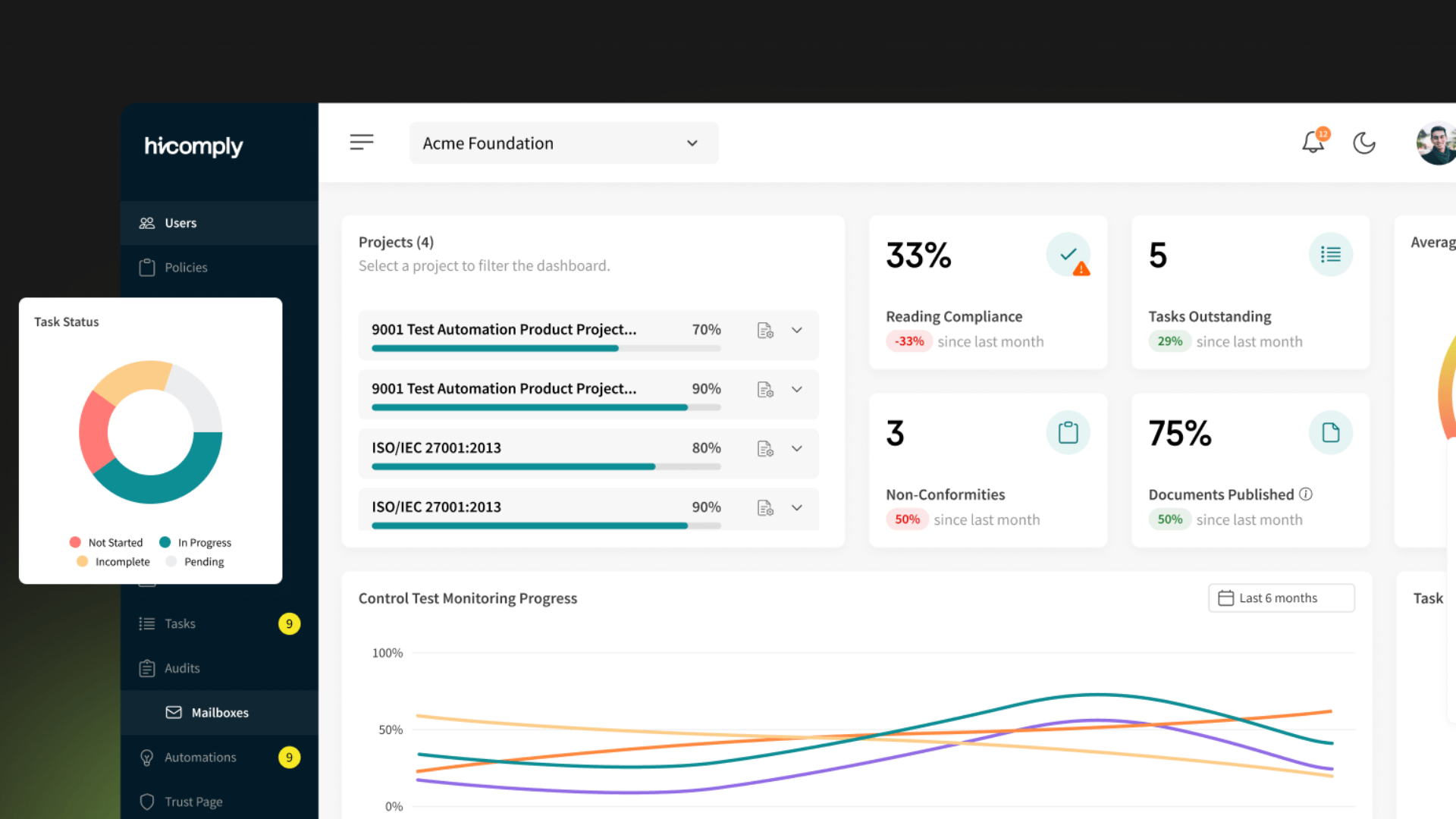
- Whole-business compliance platforms bring policies, risks, assets, controls and evidence together within an integrated management system, supporting compliance responsibilities across the business.
- Compliance automation platforms typically place greater emphasis on integrations, automated evidence collection and technical control monitoring, which can be particularly valuable for cloud-native businesses.
- Enterprise GRC platforms often provide broader, configurable capabilities across enterprise risk, internal audit, privacy and regulatory compliance, supporting more complex organisational structures.
There is considerable overlap between these approaches. Rather than focusing solely on feature lists, I'd recommend taking a closer look at how a platform will support the day-to-day management of your programme.
Six things to consider when choosing a multi-framework compliance platform
1. Can you build on the work you've already done?
When supporting customers with additional frameworks, one of the first things we look at is what they already have in place.
Take ISO 27001 and ISO 42001, for example. With around 50% of requirements mapped between the two standards in Hicomply, businesses can carry forward much of their existing groundwork, subject to its relevance within the context of AI governance.
Ask providers to demonstrate how overlapping requirements are mapped, how policies, controls and evidence can be reused, and how easily you can introduce another framework.
You shouldn't have to start from scratch every time your requirements evolve.
2. Does it support compliance across your whole business?
Of the 93 Annex A controls within ISO 27001:2022, just 34 are technological. The remaining 59 cover organisational, people and physical controls.
Whilst automated technical checks are incredibly valuable, they only tell part of the story.
Some of the biggest challenges businesses face involve maintaining policies, coordinating responsibilities across departments, managing suppliers and keeping on top of reviews.
Consider how a platform supports these activities throughout the year, not just in the run-up to an audit.
3. Can you see how everything connects?
As compliance programmes grow, maintaining visibility can become increasingly difficult.
Understanding which risks relate to which controls, who is responsible for them and whether the relevant evidence is up to date is fundamental to effective governance.
I'd recommend looking at how risk, policy, asset, task and control management work together within a platform. The more connected these activities are, the easier it becomes to understand your overall compliance position and identify where attention is needed.
4. Where can technology genuinely make your life easier?
There's a significant opportunity for automation and AI to reduce the manual workload involved in compliance.
But an extensive integration library or a long list of AI capabilities doesn't necessarily translate into time saved.
Think about where your team currently spends most of its time. Is it searching for evidence? Mapping requirements? Drafting policies? Monitoring controls?
Ask providers to demonstrate how their technology can help with these specific challenges.
Equally, understand where human oversight remains in place. Technology should help your team make informed decisions, not remove their accountability for them.
5. Who is there to support you along the way?
One consideration I'd encourage businesses not to overlook is the level of support available alongside the software.
Every organisation approaches compliance from a different starting point. Some have experienced internal teams, whilst others are navigating certification requirements for the first time, often alongside their day-to-day responsibilities.
Having the right platform is important. But having access to people who can help you understand your requirements, work through challenges and plan your next steps can make all the difference.
Ask providers what support looks like beyond onboarding. Who can you speak to when you're unsure about a requirement? What happens when you're preparing for your next audit or introducing another framework? And is that expertise included or an additional cost?
6. Will the platform continue to meet your needs as you grow?
I'd always recommend evaluating a platform against where you expect your business to be in 12 to 18 months, not just where it is today.
Consider how introducing additional frameworks, bringing more colleagues into your programme or connecting new systems will impact both your experience and your costs.
Understanding this upfront can help you avoid unnecessary complexity and unexpected costs further down the line.
Comparing multi-framework compliance platforms
There's no single compliance platform that's the right fit for every organisation.
Naturally, my experience comes from working with businesses using Hicomply. However, there are several established providers worth exploring, each with different strengths and areas of focus.
The following comparison provides a starting point for those conversations.
When speaking to providers, I'd recommend asking them to demonstrate a real-world scenario relevant to your business. For example, how would you introduce ISO 42001 into an existing ISO 27001 management system? What work could be carried forward, what would be new, and what support would be available?
It's a much more meaningful way to understand how a platform will work for your team.
Think beyond your next certification
One of the most rewarding parts of my role is seeing businesses progress from their first certification to establishing increasingly mature compliance programmes that support their wider ambitions.
Your requirements today may look very different in 12 or 18 months. You might be entering new markets, responding to evolving customer expectations or introducing new technologies across your business.
The right platform, alongside the right expertise, should give you the confidence to navigate those changes without having to start again.
It's something we prioritise at Hicomply. Helping businesses establish strong foundations, make the most of the work they've already done and feel supported at every stage of their compliance journey.
Ultimately, achieving certification is an important milestone. But it's what you're able to build on those foundations that can deliver real, long-term value to your business.